Company knowledge for AI agents
Keep your tools. Feed them all from one brain.
An AI agent is only as good as what it knows about your company. Epic Context gives every agent the same brand, users, product and decisions through one MCP connector and an API, and nothing you use today is replaced.
The problem
Tools start every project from zero. A brain starts where the last one ended.
An agent wired into one tool knows what that tool holds and what someone pasted into its prompt. The next agent, in the next tool, starts over. What one learns, the other never hears.
Tool by tool
What each project learns stays behind.
- Project 1: starts from zero.
- Project 2: starts from zero.
- Project 3: starts from zero.
- Project 4: starts from zero.
With a brain
What each project adds stays.
- Project 1: adds the first layer.
- Project 2: starts from what the first project added, and adds its own.
- Project 3: starts from what the first 2 projects added, and adds its own.
- Project 4: starts from what the first 3 projects added, and adds its own.
One way in
One connector, an API and a plugin, with your own company account.
Claude, Claude Code and Cursor connect through one MCP connector, signed in with your company account (OAuth). Apps and integrations use API keys, profile bundles, an episodes endpoint for what they learn, and webhooks when something changes.
Every agent reads the same brand, users, product and decisions. Nothing you use today is replaced.
Epic Context · Architecture
One brain, layer by layer
This page is about this layer: Your workspace
Where you already work
Colleagues and agents work together in the Epic Suite, in your own tools, or in an AI workspace you connect. You ask the question and decide what happens with the result.
Agents and models
The thinking
Agents do the work when you ask. Every model call goes through one door that counts it. Today that model is Claude; the door can point an organisation at another model, and a second model has not run yet.
This page is about this layer: One gateway
One way in
The AI and the brain talk through one connector, with your own company account: MCP for Claude, Claude Code and Cursor; an API with keys, bundles, episodes and webhooks for apps; a plugin for Claude Code.
Context engine
The briefing
Every task gets the right expert and exactly the blocks it must see, in full, then related blocks as excerpts up to a token budget. Read first, then write with a reason.
Knowledge
Craft and memory
Craft is the experts: one per group, each with sub-skills, and your own rules on top. Memory is the brain: eight groups, thirty-four kinds of knowledge, every fact linked to what it rests on. The editors order it every night and propose; they never rewrite.
Foundation
Yours
Every change has a reason, a source and an owner, and can be undone. Locks refuse every writer. You can export the whole brain at any time; running it on your own server is planned.
Read first
Read first, then write with a reason.
- A briefing per task hands the agent the blocks it must see, with the right expert.
- A write gate checks that it read before it wrote: off, warn or enforce.
- The changes feed shows every write with its source and reason; one click undoes it.
- A lesson becomes a rule. What an agent learns goes back as a learning or a rule for the next task.
Your tools, or the suite
Keep your tools, or work in the Epic Suite.
The Epic Suite runs on the same brain. Every organisation has six base tools: Dashboard, Brain, Design, Kanban, Notes and Notifications. Apps such as Social, Content and Analytics are switched on per organisation.
One account, one menu, one AI budget. Use as much or as little of it as you like; your own tools read the same source either way.
- Everyone works apart.
- Joined: one truth on every screen.
- One brain.
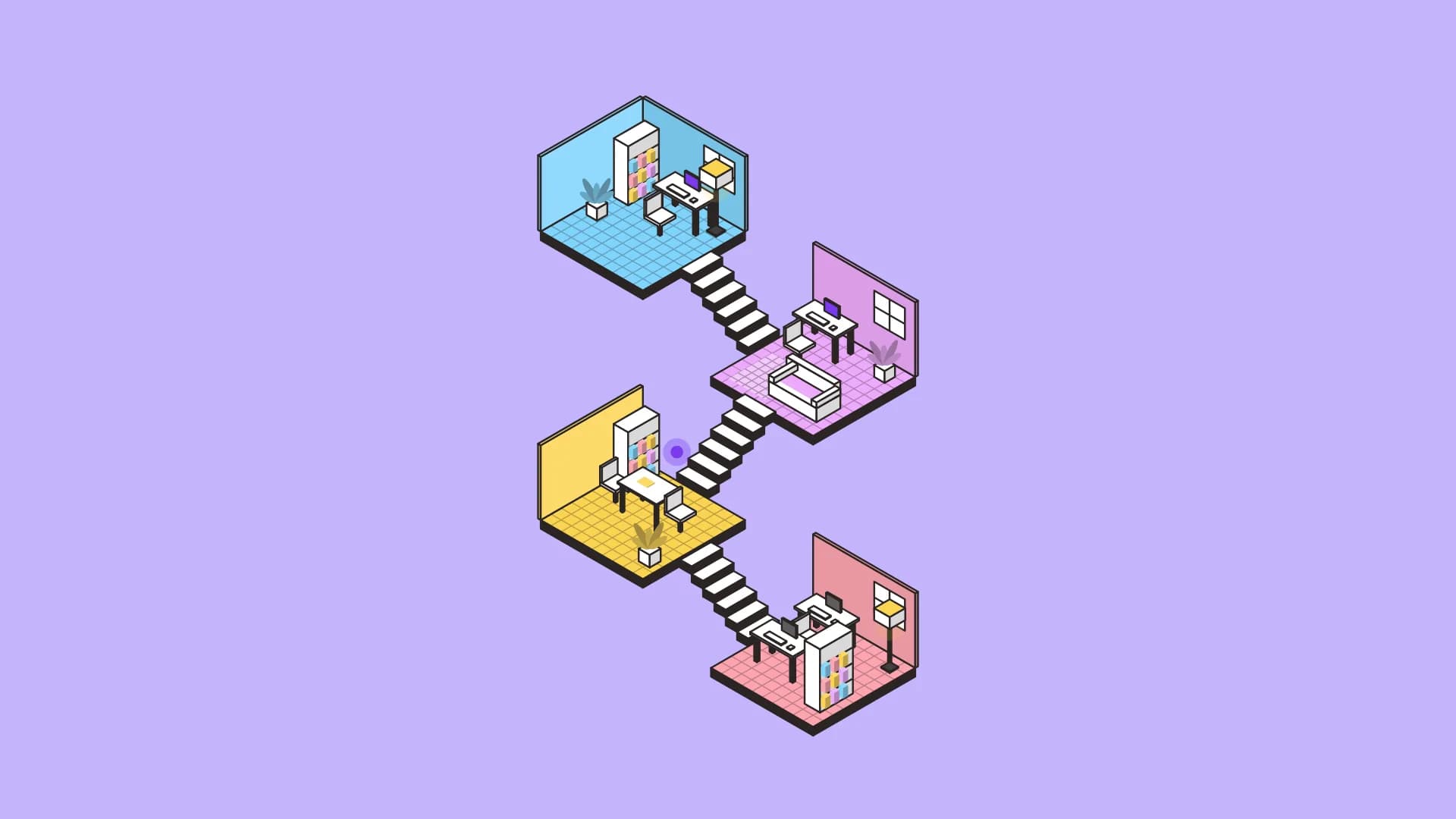
An illustrationEvery tool keeps its place, and every one of them reads the same brain. Made from our own brain, in the suite's Content app.
Where it stops
It holds what is not code, and it is no data lake.
| What stands in the way | What we bring | Where it stops |
|---|---|---|
| Tools do not share what they know | Every tool reads the same source, over MCP and APIs; nothing is replaced | A tool has to be able to connect |
| Every AI works its own way | Experts: the right way of working for each task, growing with what the company learns | They bring the method; the company brings the facts |
| Agents need what the company means, not every record it has | The brain holds what your data means: the brand, users, product, design and decisions | No customer records and no real-time data; the code stays in the repo |
Questions
How do AI agents get company knowledge?
Through a connector. In Epic Context an agent connects over MCP, or an app over the API, asks for a briefing for its task, and gets the blocks that task must see, with the right expert. It reads first and writes back with a reason.
Is this RAG?
Not in the usual sense. Retrieval-augmented generation fetches passages that look like the question. A briefing hands an agent the blocks its kind of task must see, in full, chosen by the task and the relations in the brain, then related blocks as excerpts up to a budget. Search is there too, for what a task does not name.
Which agents can connect?
Any AI client that speaks MCP. Claude, Claude Code and Cursor connect today with your company account. Apps and your own tools connect over the API with keys and webhooks.
Can an agent write to it?
Yes, with a reason. Every write is checked against the schema, lands in the changes feed with its source and reason, and can be undone in one click. A locked block refuses every writer.
What does it not hold?
Code, customer records and real-time data. The code stays in the repo and your data stays where it is; the brain holds what it all means: the brand, users, product, design, decisions and how you measure them.
Start with one real project
Epic Stories installs Epic Context with your team, on your own work, and then steps back. Tell us where you would start.